
Quick Answer
A construction struck-by incident occurs when a worker is hit by a moving vehicle or equipment, a flying or falling object, or a swinging or suspended load. OSHA continues to teach struck-by hazards as one of its construction Focus Four categories, but the claim analysis in California depends on the actual event, medical evidence, and state workers’ compensation law. California safety orders separately address backing vehicles, overhead loads, and personal protective equipment. Those rules can help identify evidence after an incident, but they do not by themselves decide a compensation claim.
What Counts as a Struck-By Hazard?
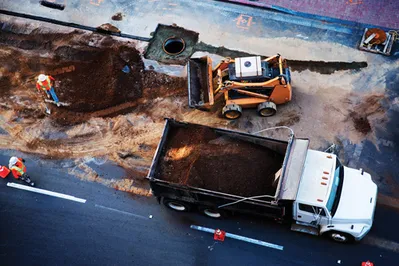
The struck-by category covers several different event patterns. A worker may be hit by a dump truck backing through a congested area, material falling from above, debris ejected from a tool, a load swinging from lifting equipment, or a component that shifts during handling. Those events should not be collapsed into one generic “construction accident” description because the relevant witnesses, equipment records, photographs, and safety controls can be different.
The best post-incident record identifies what moved, where the worker was positioned, who controlled the equipment or material, what task was underway, and what changed immediately before contact. That factual reconstruction matters even when workers’ compensation does not require proof of employer negligence.
Backing Vehicles and Workers on Foot
California Title 8 section 1592 contains warning-method requirements for construction haulage and earth-moving operations. Certain larger haulage vehicles must have an automatic backing warning device, and in congested or high-noise conditions that obscure the alarm, a signaler in clear view of the operator directs the backing operation. The rule also provides alternatives for other vehicles whose backward movement would endanger workers on foot when the operator’s rear view is obstructed.
After a backing incident, useful evidence can include the vehicle identifier, owner and employer, operator name, backup-alarm condition, spotter assignment, camera or sensor information if available, route of travel, visibility restrictions, lighting, ambient noise, and witness accounts.
Falling, Flying, and Swinging Objects
Struck-by injuries also arise from tools, materials, fragments, rigging, structural components, and loads. The evidence question is not merely whether a hard hat was present. Investigators may need to understand storage and securing methods, exclusion zones, housekeeping, tool or equipment condition, who was controlling the material, and whether the object fell, was propelled, or swung into the worker.
California construction PPE rules require employers to assure that required protective devices and safeguards comply with applicable Title 8 standards and are maintained in safe condition. PPE is one layer of hazard control; it does not replace the need to control the source of a falling or flying-object hazard.
Cranes, Hoisting Equipment, and Overhead Loads
California’s current crane and hoisting framework includes Title 8 section 5002, which requires operations to be controlled to avoid exposing employees to overhead-load hazards and restricts employees from the fall zone when a suspended load is not moving, subject to listed exceptions for tasks such as hooking, unhooking, guiding, or initial attachment. The exact rule set depends on the equipment and task, so a page should not generalize one crane requirement to every lift.
Important records may include the equipment identity, lift plan if one exists, load and rigging information, signal-person or rigger identities, photographs of the load path, operator and inspection records, and video. These records may belong to different contractors, making prompt identification of the companies involved especially important.
What Evidence Should Be Preserved?
- Photographs or video of the scene, vehicle/equipment positions, object or load, barricades, visibility, lighting, and the worker’s location, when safe and lawful.
- Equipment numbers, license plates, contractor names, ownership markings, and the names of operators, spotters, signal persons, or riggers involved.
- Witness names and contact information before crews rotate or leave the project.
- Daily reports, safety meeting records, task plans, inspection records, lift documentation, and employer incident reports that actually exist.
- Medical records, DWC-1 paperwork, work-status notes, wage records, and claim correspondence.
Workers’ Comp and Possible Third-Party Issues
A worker injured by a vehicle, object, or suspended load while performing job duties may have a California workers’ compensation claim even if another company or person was involved. If a separate non-employer entity contributed to the event, there may also be a distinct third-party question. That civil analysis is fact-specific and can affect evidence preservation and reimbursement/subrogation issues, so it should be reviewed separately rather than presented as an automatic extra lawsuit.
Bottom Line
A worker injured by a vehicle, object, or suspended load while performing job duties may have a California workers’ compensation claim even if another company or person was involved. If a separate non-employer entity contributed to the event, there may also be a distinct third-party question. That civil analysis is fact-specific and can affect evidence preservation and reimbursement/subrogation issues, so it should be reviewed separately rather than presented as an automatic extra lawsuit.
Questions Construction Workers Commonly Ask
Is being hit by a vehicle always a struck-by event?
It can be described that way as a safety mechanism, but the legal and medical analysis still depends on the actual work event, injury, and claim evidence.
Does a missing backup alarm automatically win a workers’ comp case?
No. Safety-rule compliance can be relevant evidence, but workers’ compensation entitlement and any separate civil claim have their own legal requirements.
What if the equipment belongs to another contractor?
Identify the company, equipment, operator, and witnesses. Workers’ compensation and any third-party analysis should then be evaluated separately.
Sources and Legal References
- OSHA – Construction Focus Four Training Materials
- California DIR/Cal/OSHA – Title 8 §1592, Warning Methods
- California DIR/Cal/OSHA – Title 8 §5002, Overhead Loads
- California DIR/Cal/OSHA – Title 8 §1514, Personal Protective Devices
- California DWC – How to File a Workers’ Compensation Claim
Related Legal Resources
- Construction Injuries Lawyer Van Nuys
- Construction Focus Four Hazards in California: Falls, Struck-By, Caught-In/Between, and Electrocution
- Road Work Zone Injuries in California: Traffic Hazards, Safety Rules, Evidence, and Workers’ Comp
- Heavy Equipment Accidents in California: Major Hazards, Safety Rules, and Workers’ Compensation
- Construction Fall Injuries in California: Fall Protection, Evidence, and Workers’ Comp
- Contact Hussain & Gutierrez
This content is general California legal information and is not individualized legal advice.