
Quick Answer
Road construction workers can be exposed to two moving-vehicle systems at the same time: public traffic passing through or beside the work zone and construction vehicles or equipment moving inside it. California safety rules address work-zone traffic control, flaggers, high-visibility clothing in specified conditions, excavation hazards, and outdoor heat. After an injury, the most useful evidence often includes where the worker was positioned, the traffic-control setup, equipment and vehicle identities, photographs, witness names, work orders, employer reports, and medical/work-status records. A safety-rule issue can matter to the facts, but workers’ compensation generally turns on whether the injury arose out of and occurred in the course of employment—not on proving employer negligence.
Why Road Work Zones Create a Distinct Risk Pattern
A road crew may be paving, trenching, striping, repairing utilities, placing signs, operating machinery, or directing traffic while ordinary drivers continue to pass nearby. The risk is not limited to a single “construction accident” category. Workers can be struck by public vehicles, backed over or pinned by construction equipment, hit by material or debris, fall into an excavation, contact electrical hazards, or develop heat illness during outdoor work.
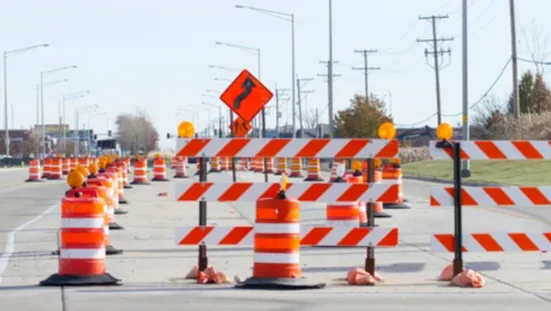
That combination makes the work-zone layout important. A later investigation may need to reconstruct lane closures, taper locations, signs, cones, barriers, flagger stations, equipment travel paths, pedestrian routes, lighting, visibility, and the worker’s assigned task.
California Traffic-Control and Flagger Rules
California Title 8 section 1598 requires a traffic-control system when hazards arise from traffic or haulage conditions at work sites that encroach on public streets or highways. The rule incorporates the California Manual on Uniform Traffic Control Devices by reference for traffic-control systems. Section 1599 separately addresses flaggers when moving traffic cannot be controlled adequately by barricades, signs, and signals alone.
Those rules are safety context, not automatic claim outcomes. After an injury, records showing the traffic-control plan, who installed or changed it, the flagger assignment, training records, daily inspection or tailgate records, and photographs of the actual setup can help explain what happened. Preserve facts rather than assuming that a later citation or rule issue decides compensability or civil fault.
Moving Equipment Inside the Work Zone
Public traffic is only one vehicle hazard. Dump trucks, rollers, pavers, loaders, excavators, water trucks, pickups, and other equipment may move through tight spaces with limited sight lines. The relevant evidence can include equipment identification, operator assignment, spotter practices, backing routes, alarms or cameras where present, shift inspection records, radio communications, and whether the worker was assigned to a recognized pedestrian path or active equipment area.
Excavations, Trenches, and Public Vehicular Traffic
Road work frequently involves cuts, pits, trenches, or utility excavation. California’s excavation rules address access, protective systems, spoil placement, inspections, and other hazards. Section 1541 also requires employees exposed to public vehicular traffic to wear warning garments marked with or made of reflectorized or high-visibility material.
If an incident involves a trench or excavation, useful records can include depth and dimensions, soil and protective-system information, competent-person inspections, access/egress locations, adjacent traffic conditions, photographs before the area is backfilled, and the worker’s specific task. Do not assume every excavation requires the same protective system; the rule depends on conditions and listed exceptions.
Outdoor Heat Still Matters on Road Crews
Construction is one of the industries covered by California’s outdoor heat standard, including high-heat procedures when the regulatory threshold is met. Water, shade, cool-down access, training, emergency response, and acclimatization procedures can become relevant when heat contributes to an event.
A road-work-zone article should mention heat only as a work-zone factor and route the reader to the dedicated heat resource for the full rule set and symptom/emergency guidance.
What to Preserve After a Road Work Zone Injury
- Photographs or video showing the lane closure, cones, signs, barriers, flagger position, lighting, visibility, excavation, and equipment locations.
- Vehicle and equipment identifiers, including company ownership if a public motorist or outside contractor was involved.
- Names and contact information for coworkers, flaggers, supervisors, motorists, inspectors, or other witnesses.
- The worker’s assignment, work order, daily report, tailgate or safety meeting record, and any traffic-control plan available to the crew.
- Employer injury report, DWC-1 claim form if provided, medical records, work-status notes, and wage information if time is lost.
- Any law-enforcement, Caltrans/local-agency, contractor, or incident record that actually exists. Do not create or “reconstruct” documents after the fact.
Workers’ Comp and a Possible Third-Party Driver Claim
A California employee injured while doing road-construction work may have a workers’ compensation claim even when the immediate event was a vehicle collision. If a separate person or company outside the employer relationship contributed—such as a non-employer motorist—there may also be a distinct civil-liability question.
The practical point is evidence preservation: identify all vehicles, employers, contractors, insurers, and witnesses early, then let qualified counsel determine which legal routes actually apply.
Bottom Line
Road work zones deserve their own resource because the evidence is highly temporary and the hazard pattern combines public traffic with construction operations. Preserve the work-zone layout, vehicle/equipment identities, witness information, job records, and medical/work-status evidence. Use California traffic-control and construction rules as factual context, while keeping workers’ compensation and any third-party civil claim analytically separate.
Frequently Asked Questions
- Does a driver have to hit me for a road-work injury to be covered? No. A work-zone injury can arise from equipment, a fall, excavation, heat, electrical hazards, or other job conditions. Coverage depends on the facts and California workers’ compensation rules.
- Does a missing cone or sign automatically prove my case? No. A traffic-control issue can be important evidence, but it does not by itself decide workers’ compensation entitlement or civil liability.
- What if a member of the public caused the crash? A separate third-party claim may need evaluation. Keep that question separate from the workers’ compensation claim and preserve the driver/vehicle/insurance information.
- Should I photograph the work zone? If it is safe and lawful to do so, contemporaneous photographs can preserve temporary conditions. Do not enter an unsafe area or interfere with emergency response to obtain evidence.
- Where should heat-illness details live?
Sources and Legal References
- California DIR/Cal/OSHA – Title 8 §1598, Traffic Control for Public Streets and Highways
- California DIR/Cal/OSHA – Title 8 §1599, Flaggers
- California DIR/Cal/OSHA – Title 8 §1541, General Requirements for Excavations
- California DIR/Cal/OSHA – Title 8 §1541.1, Requirements for Protective Systems
- California DIR/Cal/OSHA – Title 8 §3395, Heat Illness Prevention in Outdoor Places of Employment
- California DWC – Injured Worker Resources
Related Legal Resources
- Construction Injuries Lawyer Van Nuys
- Construction Focus Four Hazards in California: Falls, Struck-By, Caught-In/Between, and Electrocution
- Heavy Equipment Accidents in California: Major Hazards, Safety Rules, and Workers’ Compensation
- Struck-By Accidents in California Construction: Vehicles, Falling Objects, Cranes, Evidence, and Workers’ Comp
- Workers Compensation Attorney In Van Nuys
- Contact Hussain & Gutierrez
This content is general California legal information and is not individualized legal advice.