
Quick Answer
Post-Treatment Lyme Disease Syndrome (PTLDS) describes prolonged symptoms such as fatigue, body aches, or difficulty thinking that can continue after a person has completed recommended antibiotic treatment for Lyme disease. The CDC says the cause of these prolonged symptoms is not currently known and that additional or prolonged antibiotics are generally unlikely to help. For a California outdoor worker, the workers’ compensation question is separate from the medical diagnosis: the worker must build evidence that the original tick exposure and resulting illness were connected to the job, while medical professionals determine whether ongoing symptoms are related to treated Lyme disease or another condition.
What Is Post-Treatment Lyme Disease Syndrome?
The CDC uses the term Post-Treatment Lyme Disease Syndrome (PTLDS) for prolonged symptoms that some people experience after treatment for Lyme disease. Reported symptoms can include fatigue, body aches, and difficulty thinking.
The important medical point is uncertainty. The CDC states that the cause of these prolonged symptoms is not currently known. Similar symptom patterns can occur after other infections, and fatigue, pain, concentration problems, sleep disruption, dizziness, or other ongoing complaints can have many non-Lyme causes.
That is why a responsible article should not tell a reader, “You still have Lyme disease,” simply because symptoms continue.
PTLDS is not proof of ongoing infection
The CDC discourages the phrase “chronic Lyme disease” when it is used to imply that persistent symptoms necessarily result from continuing bacterial infection. Current CDC guidance states that longer courses of antibiotics have generally not been shown to improve prolonged symptoms after recommended treatment and can expose patients to serious complications.
A worker who continues to feel unwell should work with a qualified healthcare professional to evaluate the symptoms, possible alternative causes, and appropriate management.
Can Lyme Disease Be a Work-Related Illness in California?
It can be, depending on the facts and medical evidence.
California workers’ compensation can cover occupational illness when the evidence supports a connection between employment and the condition. For a tick-borne illness, the difficult part is often not proving that Lyme disease exists. The difficult part is establishing where and when the likely exposure occurred and whether the employment materially contributed to that exposure.
A forestry worker who spent several days clearing brush in a known tick area presents a different factual record from someone who works entirely indoors but hikes frequently on weekends. The medical diagnosis may be the same; the occupational evidence is not.
Work-related exposure evidence may include
- the exact jobsite or route where the worker was assigned;
- whether the work involved brush, tall grass, wooded areas, leaf litter, logs, or similar tick habitat;
- dates and duration of the outdoor assignment;
- clothing and personal protective measures used;
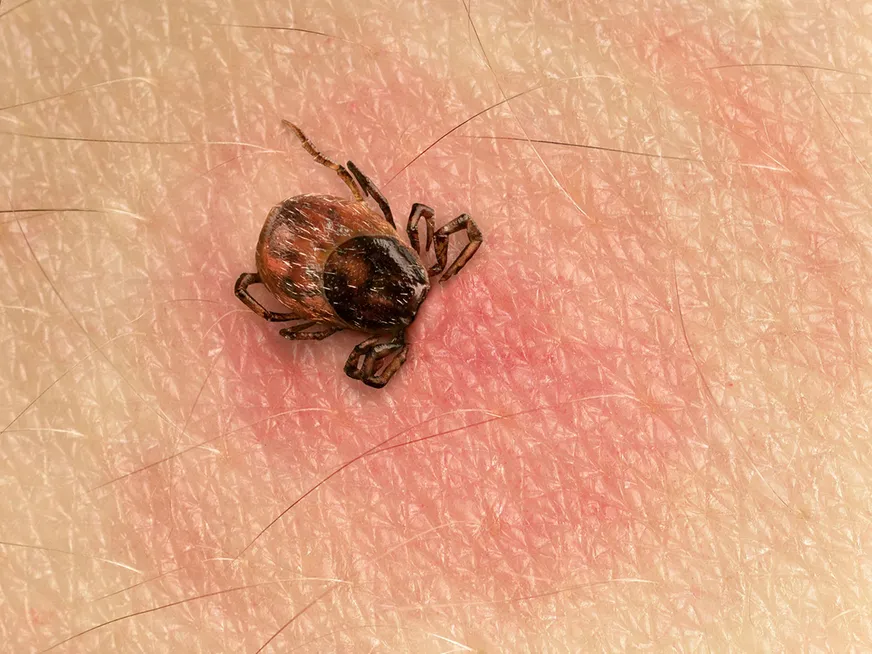
- photographs of an attached tick, rash, or bite area;
- a saved tick, if one was safely removed and retained;
- reports to a supervisor or employer;
- coworkers who encountered ticks at the same site;
- medical records documenting the worker’s occupational history;
- travel and recreational history that helps a clinician evaluate other possible exposure locations; and
- public-health information about tick activity in the relevant area.
The goal is not to “prove the case” through one dramatic piece of evidence. It is to create a coherent timeline that a physician and, if necessary, a claims decision-maker can evaluate.
Where Are California Workers Most Likely to Encounter Lyme-Carrying Ticks?
The California Department of Public Health states that the western blacklegged tick can transmit Lyme disease in California. Risk varies by geography, habitat, and season.
CDPH identifies higher-risk areas that include the northern coastal region, northern Sierra Nevada foothills, the San Francisco Bay Area, and parts of the Central Coast. That does not mean a worker outside those areas can never encounter an infected tick. It means exposure history should be specific rather than generic.
California also notes that a meaningful share of reported Lyme disease cases involve exposure outside the state. For a workers’ compensation analysis, that makes travel history relevant. A clinician may need to know whether a worker was assigned to outdoor work in California, traveled for work, traveled personally, or spent recreational time in another Lyme-endemic region.
What Symptoms Can Continue After Lyme Disease Treatment?
According to the CDC, some people report prolonged symptoms such as:
- fatigue;
- body aches or pain;
- difficulty thinking or concentrating; and
- other persistent symptoms that can affect daily function.
These symptoms are real, but they are not specific enough to diagnose PTLDS on their own. A person with fatigue and brain fog may have PTLDS, another post-infectious condition, a medication effect, a sleep disorder, depression, diabetes, another infection, or a different medical problem.
That is why documentation should describe what the worker can and cannot do, not simply repeat a diagnostic label.
Useful functional information can include:
- how long the worker can stand, walk, lift, or concentrate;
- whether symptoms worsen after exertion;
- whether the worker can complete a full shift;
- whether sleep disruption affects alertness or attendance;
- whether medication side effects affect safe job performance; and
- what restrictions the treating clinician has actually issued.
What Should an Outdoor Worker Do After a Tick Bite?
If a tick is attached, California and CDC guidance emphasizes prompt removal and monitoring for symptoms. A worker should follow current public-health instructions for safe tick removal rather than using folk remedies that delay removal.
From an evidence standpoint, it can also help to:
- note the date, time, and work location;
- photograph the tick before or after removal if practical;
- photograph any rash or skin change over time;
- tell a supervisor that the bite happened during work;
- preserve the work assignment, route, or jobsite information;
- seek medical care when symptoms or the circumstances warrant it; and
- tell the healthcare provider that the possible exposure occurred at work and describe the exact location and activity.
A prompt report is especially useful because weeks or months later it can be difficult to reconstruct where exposure most likely occurred.
What If Symptoms Continue After Antibiotic Treatment?
The first priority is medical evaluation, not a legal label.
The CDC advises people with prolonged symptoms after Lyme treatment to work with a healthcare provider to consider all possible causes. Current CDC guidance also states that additional prolonged antibiotic treatment is unlikely to help most patients with persistent symptoms after recommended treatment and can cause serious complications.
A workers’ compensation claim should therefore focus on the worker’s actual medical record:
- the original Lyme diagnosis;
- treatment received;
- follow-up evaluations;
- ongoing symptoms;
- testing used to investigate other causes;
- functional restrictions;
- work status; and
- the physician’s opinion about whether the ongoing condition is related to the occupational exposure.
The legal system should not substitute for medical diagnosis, and the medical system should not be expected to resolve legal causation without a complete occupational history.
How Can PTLDS Affect a Workers’ Compensation Claim?
A prolonged-symptom case may involve several workers’ compensation issues.
Medical treatment
If the underlying Lyme disease and continuing condition are accepted as work related, reasonable medical treatment may be part of the claim. The exact treatment should be determined by qualified medical professionals and the workers’ compensation treatment process—not by a blog article.
Temporary work restrictions
Fatigue, dizziness, pain, cognitive difficulty, or medication effects may affect whether a worker can safely perform regular duties. Restrictions should come from the treating medical provider.
Temporary disability
If the accepted work injury prevents the employee from working and the statutory requirements are met, temporary disability benefits may become relevant. Whether benefits are payable depends on the actual medical certification, earnings, work availability, claim status, and other facts.
Permanent impairment
Some workers recover completely; others may have lasting limitations. Permanent disability is not assumed simply because symptoms lasted for several months. California uses medical reporting and legal rating rules to evaluate permanent impairment.
Disputes over causation
Insurers may question whether a tick bite happened at work, whether Lyme disease was correctly diagnosed, or whether current symptoms are still industrially related. That makes early exposure documentation unusually important.
What Evidence Should You Preserve?
A practical evidence file can include:
- DWC-1 claim form and dated proof of delivery;
- incident reports;
- jobsite addresses and maps;
- timesheets, dispatch records, work orders, or route logs;
- photographs of the jobsite, vegetation, tick, bite, or rash;
- names of coworkers or supervisors with knowledge of the exposure;
- medical records and test results;
- the clinician’s work-status notes;
- pharmacy records;
- travel history relevant to other possible exposure; and
- communications about modified work or absences.
Keep original records whenever possible. A later dispute becomes much easier to evaluate when the worker can show a contemporaneous timeline instead of relying on memory alone.
How Does This Differ From a General Occupational-Disease Claim?
PTLDS after a work-related Lyme infection is one possible occupational-disease scenario, but it has a distinctive evidence problem: the exposure can be a tiny tick bite that was never noticed.
The broader occupational-disease rules still matter. California can treat occupational illness and cumulative injury differently from one-time accidents when determining the legally relevant date of injury. The DWC physician guide explains that for cumulative injury or occupational illness, the date used for limitations purposes can depend on when disability first occurred and when the worker knew or reasonably should have known that employment caused it.
That rule is fact-specific. Do not assume that the date of the tick bite, diagnosis, first symptom, or last day worked automatically controls every deadline.
When Should a Worker Get Legal Help?
Consider speaking with a California workers’ compensation attorney when:
- the employer or insurer disputes that the exposure occurred at work;
- the worker cannot identify one precise bite date but had repeated occupational tick exposure;
- the claim is denied;
- treatment authorization is disputed;
- the worker has significant restrictions or lost time;
- the medical record contains conflicting causation opinions;
- there are questions about cumulative or occupational-disease timing; or
- the worker is being pressured to return to duties that conflict with medical restrictions.
Organizing the exposure timeline early helps treating professionals and legal counsel understand the case.
Bottom Line
PTLDS is a recognized term for prolonged symptoms after treated Lyme disease, but its cause remains uncertain and persistent symptoms should not be treated as proof of an ongoing bacterial infection. For California workers whose Lyme disease may have come from occupational tick exposure, the strongest approach is to keep the medical and legal questions separate: obtain careful medical evaluation, document the outdoor exposure and jobsite history, preserve records, report the condition, and build the workers’ compensation claim around evidence rather than assumptions.
Frequently asked questions
Is PTLDS the same as chronic Lyme disease?
No. The CDC recommends the term Post-Treatment Lyme Disease Syndrome for prolonged symptoms after treated Lyme disease and discourages terminology that implies a proven ongoing infection when the cause of persistent symptoms is not known.
Can outdoor work cause Lyme disease in California?
Outdoor work can increase exposure to ticks in areas where infected western blacklegged ticks are present. CDPH specifically publishes tick-safety guidance for outdoor workers. Whether a particular worker’s Lyme disease arose from employment requires medical and factual evidence.
Do I need to see the tick for a workers’ comp claim?
Not necessarily, but contemporaneous evidence can make the exposure history stronger. Some tick bites are never noticed. Jobsite records, medical history, witness information, photographs, and clinician opinions may all matter.
Does a positive Lyme test automatically prove the infection came from work?
No. A diagnosis and occupational causation are separate questions. The worker’s jobsite exposure, personal travel/recreation, timing, medical history, and physician opinion can all be relevant.
Should I take more antibiotics if symptoms continue?
That is a medical decision. Current CDC guidance states that extended antibiotic treatment has generally not been shown to improve prolonged symptoms after recommended treatment and can cause serious complications. Discuss persistent symptoms with a qualified healthcare professional.
Sources and Legal References
- CDC — Chronic Symptoms and Lyme Disease
- CDC/NIOSH — Tickborne Diseases in Workers
- California Department of Public Health — Lyme Disease
- CDPH — Tick-Borne Diseases: Occupational Health Toolkit
- California DWC — Physician’s Guide to Medical Practice in the Workers’ Compensation System