
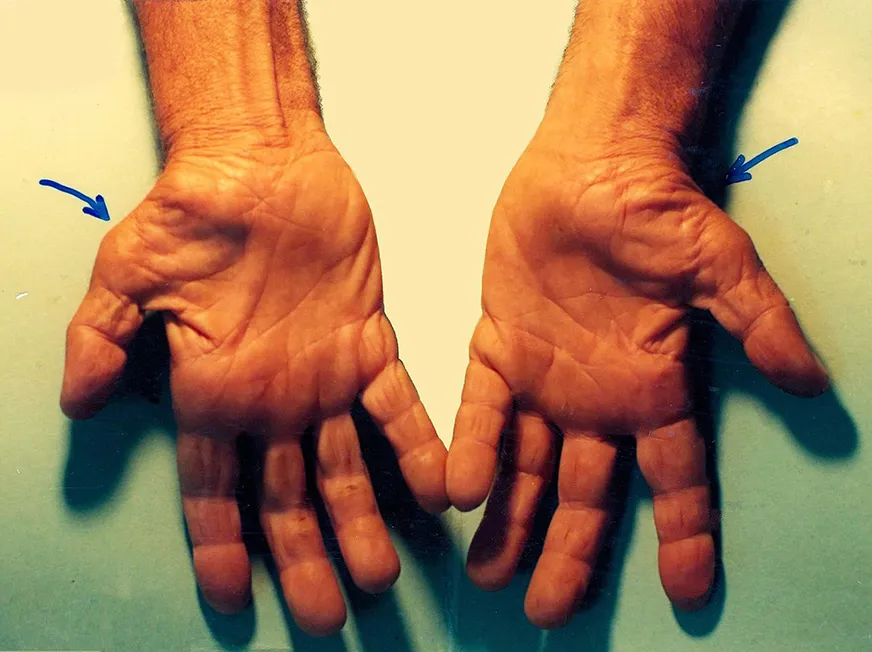
Quick Answer
Carpal tunnel syndrome (CTS) happens when the median nerve is compressed at the wrist. Work can contribute in some cases, especially where jobs combine forceful hand exertion, repetition, awkward wrist posture, or vibration, but CTS is not automatically caused by typing or by any single job task. California workers’ compensation can cover a work-related CTS claim when the medical evidence supports industrial causation. The most useful evidence is a clear diagnosis plus a detailed history of the worker’s actual hand/wrist exposures and when symptoms affected function.
What is carpal tunnel syndrome?
The National Institute of Arthritis and Musculoskeletal and Skin Diseases (NIAMS) explains that carpal tunnel syndrome occurs when the median nerve is pressed or squeezed at the wrist as it passes through the carpal tunnel.
The median nerve provides sensation to the thumb, index and middle fingers and part of the ring finger, and it controls some muscles at the base of the thumb.
Symptoms can develop gradually. NIAMS describes common symptoms such as numbness or tingling, weakness, and difficulty with fine hand tasks. Symptoms often begin at night and can later occur during daytime activity.
A person with hand tingling does not automatically have CTS. Other nerve, neck, tendon, joint, metabolic, or medical conditions can create similar symptoms. Diagnosis belongs to a qualified clinician.
Can work cause or contribute to carpal tunnel syndrome?
Sometimes. NIOSH’s ergonomics research identifies force, repetition, awkward posture, and hand-transmitted vibration as important work-related upper-limb risk factors. For CTS specifically, NIOSH notes evidence involving combinations such as force and repetition, force and posture, and force/repetition/posture.
That is more precise than saying “repetitive typing causes carpal tunnel.” A low-force keyboard job and a high-force production job may both involve repetition but create very different exposures.
Useful occupational-causation questions include:
- How much hand force is required?
- How many repetitions occur per minute or shift?
- Is the wrist bent or deviated?
- Are vibrating tools used?
- How long is the task performed without recovery?
- Is gripping or pinching required?
- Are gloves, tools, or workstation dimensions increasing force?
- Did symptoms change with work intensity, days off, or task reassignment?
Non-work factors matter too
NIAMS notes that CTS can be associated with factors such as wrist trauma, rheumatoid arthritis, diabetes, thyroid problems, pregnancy-related fluid retention, and other conditions.
In a workers’ compensation claim, acknowledging non-work factors is not the same as conceding the claim. The medical question is whether employment caused or contributed to the condition to the degree required by California law.
A complete history is usually stronger than an incomplete one.
Specific injury or cumulative trauma?
Carpal tunnel can sometimes follow a specific wrist trauma, but many work-related claims involve cumulative exposure over time.
California DWC defines cumulative injury as injury caused by repeated events or repeated exposures at work. The date of injury for cumulative trauma can involve the Labor Code section 5412 disability-and-knowledge framework rather than simply the first day of tingling.
That distinction can affect claim timing and should be evaluated from the medical and factual record.
What jobs may involve relevant CTS risk factors?
The risk depends on the task, not the job title. Examples of potentially relevant exposures can occur in:
- assembly and manufacturing;
- meat or food processing;
- machine operation;
- construction trades;
- warehouse picking/packing;
- housekeeping;
- healthcare tasks;
- sewing or garment work;
- prolonged forceful tool use;
- vibrating-tool use; and
- some computer or data-entry work, depending on posture, force, duration, and other factors.
What evidence helps show work exposure?
A strong occupational history can be more useful than a generic job title. Preserve or document:
- job title and employer;
- exact tasks;
- hand dominance;
- hours per shift;
- cycle time/repetitions;
- grip/pinch force;
- tool type and vibration;
- wrist posture;
- production quotas;
- overtime;
- break structure;
- changes in assignment;
- symptom timeline; and
- prior hand/wrist conditions.
If coworkers perform the same task, their description can help clarify the job demands, even though each person’s medical condition is individual.
California’s repetitive-motion safety rule is not the same as workers’ comp causation
California Title 8 section 5110 is an ergonomics regulation that applies to a job, process, or operation when specified conditions are met, including more than one employee having objectively diagnosed repetitive-motion injuries predominantly caused by identical repetitive work activity within the stated period.
That regulation should not be misread as a requirement that two employees must be injured before one employee can have a workers’ compensation claim. Workers’ compensation causation is a separate legal question.
This distinction matters. The safety regulation addresses an employer’s ergonomics program obligations under its triggering conditions; it does not define all compensable repetitive-stress injuries.
Reporting and filing a California workers’ comp claim
If a worker believes CTS is related to work, the worker should report the condition and start the workers’ compensation claim process rather than waiting for symptoms to become severe.
California DWC instructs injured workers to use the DWC-1 claim form to protect their rights and begin the claim process. Keep a copy and proof of delivery.
For a cumulative condition, explain the work exposure honestly. Do not invent a single accident date if the symptoms developed gradually.
Medical diagnosis and testing
A clinician may use the medical history, physical examination, and other testing to evaluate CTS. Testing can vary depending on the symptoms and differential diagnosis.
The legal article should not tell a reader that a specific test is always required. Instead, it should emphasize that the medical record needs a defensible diagnosis and causation analysis.
Treatment and work restrictions
Treatment depends on severity and individual medical factors. Medical options may include activity modification, splinting, therapy, medication, injections, or surgery depending on clinical evaluation.
The treating provider may also recommend temporary work restrictions or ergonomic changes. Examples might involve limiting forceful gripping, vibration, repetitive wrist motion, or awkward posture. Those restrictions should be individualized rather than copied from a generic template.
If the employer offers modified work, compare the actual tasks with the restrictions.
What if the employer says CTS is “not work-related” because you have diabetes or another condition?
The existence of a non-work risk factor does not, by itself, answer California industrial causation. A medical evaluator must consider the full history.
At the same time, an article should not tell readers that work is automatically the cause simply because symptoms worsen on workdays. Good causation analysis is evidence-based.
Permanent impairment and return to work
Most CTS claims should not be framed around permanent disability from the outset. The medical course comes first.
If lasting impairment remains after treatment, California permanent disability rules may become relevant. If permanent restrictions prevent return to the regular job and other criteria are met, supplemental job displacement benefits may also be an issue.
Carpal Tunnel Evidence Checklist
- DWC-1 and proof of filing
- diagnosis and medical reports
- detailed task description
- force/repetition/posture/vibration information
- schedule and overtime records
- ergonomic evaluations, if any
- tool/workstation photos where lawful
- prior medical history
- work-status restrictions
- modified-duty offers
- wage-loss records
Frequently asked questions
Is typing the main cause of carpal tunnel syndrome?
Not necessarily. CTS has multiple possible contributors. Work-related analysis should focus on actual force, repetition, posture, vibration, duration, and medical evidence.
Can CTS be a cumulative trauma claim in California?
Yes, when repeated work exposures medically support a cumulative injury. The legal date of injury can be more complex than the first symptom date.
Does California’s repetitive-motion regulation require two injured workers before I can file a claim?
No. Section 5110’s triggering conditions relate to an employer ergonomics obligation, not whether an individual worker may pursue a workers’ compensation claim.
Do I need surgery to have a workers’ comp claim?
No. Treatment choice and claim compensability are different questions.
Can I work while being treated for CTS?
Possibly. The treating provider should determine medically appropriate restrictions, and assigned work should comply with them.
Bottom Line
A credible workplace carpal tunnel article should avoid two extremes: “typing always causes CTS” and “work can never matter because CTS has other risk factors.” The useful middle is evidence. Describe the actual exposure, obtain a defensible diagnosis, document the timeline, and let medical evidence address industrial causation.
Sources and Legal References
- NIAMS — Carpal Tunnel Syndrome
- CDC/NIOSH — Upper Limb Musculoskeletal Disorders Consortium
- CDC/NIOSH — Ergonomic Risk Factors
- California Title 8 §5110 — Repetitive Motion Injuries
- California DWC — WC Glossary
- California DWC/WCIS — Cumulative Injury / Labor Code §5412
- California DWC — How to File a Claim