
Quick Answer
A workplace amputation is a catastrophic injury that can affect emergency care, surgery, rehabilitation, prosthetic needs, future medical treatment, work capacity, permanent disability, and retraining. In California, an injured worker should focus first on emergency care, then make sure the work event is reported and the workers’ compensation claim is documented. Machine guarding and hazardous-energy controls may also be important evidence when machinery is involved. The legal value of a claim cannot be reduced to a generic settlement number; the medical outcome, work restrictions, future care, disability rating, and other claim facts all matter.
A workplace amputation changes more than one part of life
The immediate medical crisis is only the beginning. A traumatic amputation can affect mobility, hand function, dexterity, balance, endurance, pain, sleep, mental health, driving, self-care, and the ability to perform the worker’s old job.
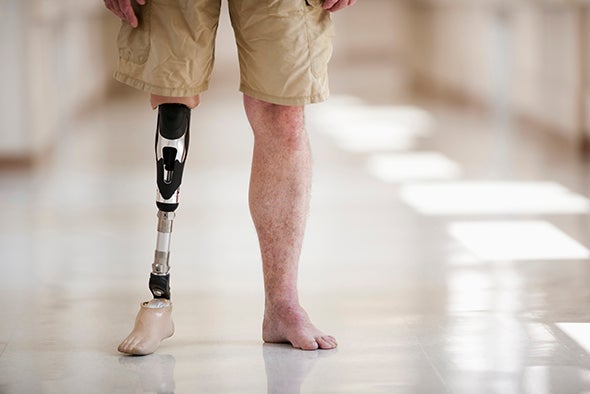
MedlinePlus notes that people with limb loss may use prosthetic devices, need physical therapy, and experience issues such as phantom pain, surgical complications, skin problems, sadness, anger, or frustration. The course varies widely. A blog should not predict whether a worker will use a prosthesis successfully or return to the same job.
For a workers’ compensation claim, the long-term record should reflect the real functional consequences rather than only the surgical diagnosis.
How workplace amputations happen
Unguarded or inadequately guarded machinery
Moving machine parts can create crushing, cutting, shearing, pinch-point, and entanglement hazards. OSHA identifies machine guarding as a major amputation-prevention measure.
California Title 8 section 4184 requires guarding at the point of operation for covered machinery where employees enter the danger zone. The exact rule depends on the machine and task.
Unexpected startup or release of stored energy
Cleaning, clearing jams, maintenance, setup, and repair can expose workers to unexpected energization or movement. California Title 8 section 3314 requires hazardous-energy control procedures for covered cleaning, repairing, servicing, setup, and adjusting operations where unexpected startup or stored energy can cause injury.
Crush and caught-between incidents
Forklifts, conveyors, presses, rollers, doors, material-handling systems, and heavy equipment can trap hands, feet, or limbs. Even when no complete amputation occurs at the scene, tissue, nerve, vessel, and bone damage can eventually require surgical amputation.
Power tools and cutting equipment
Saws, blades, grinders, shears, and other cutting tools can cause partial or complete digit or limb loss.
Why the safety investigation matters
Workers’ compensation is generally a no-fault system, so an employee does not need to prove employer negligence to seek ordinary workers’ compensation benefits. Still, safety evidence can matter for understanding how the incident occurred and whether other legal issues exist.
Useful evidence may include:
- the exact machine or equipment involved;
- manufacturer/model/serial information;
- photographs before guarding or equipment changes occur;
- whether a guard, interlock, or barrier was present;
- whether a jam, cleaning, setup, or repair task was being performed;
- lockout/tagout procedures and training records;
- maintenance records;
- supervisor instructions;
- names of witnesses;
- incident video, if preserved; and
- any Cal/OSHA investigation material.
Do not put yourself in danger to collect evidence. A catastrophic scene may be secured by emergency responders, the employer, or safety investigators.
Immediate medical priorities
A traumatic amputation requires emergency medical care. The emergency team—not a legal article—should direct bleeding control, surgery, wound management, infection prevention, pain treatment, and preservation of injured tissue where applicable.
After the acute stage, rehabilitation needs may include physical or occupational therapy, mobility training, strengthening, prosthetic evaluation, desensitization, wound/skin care, pain management, and psychological support.
MedlinePlus notes that learning to use an artificial limb takes time and that phantom pain or phantom sensation can occur. Recovery timelines vary, so avoid promises such as “you will be back to work in X weeks.”
Workers’ compensation medical treatment after amputation
For an accepted California work injury, workers’ compensation can cover reasonable medical treatment related to the injury. The treatment record may need to address not only the original surgery but also follow-up care, therapy, medications, prosthetic needs, replacement/maintenance issues where medically necessary, pain, skin complications, and other accepted consequences.
Treatment disputes can involve utilization review and independent medical review. Those procedures have their own deadlines and should be handled through the site’s medical-treatment resources rather than duplicated here.
Temporary disability during recovery
If the treating doctor says the worker cannot work during recovery, temporary disability may be relevant. If the worker can perform modified work but earns less in a qualifying way, temporary partial disability may be an issue.
The work-status report should be specific. An upper-extremity amputation can affect gripping, lifting, fine motor work, tool use, climbing, driving, or equipment operation. A lower-extremity amputation can affect standing, walking, ladders, uneven terrain, balance, driving, and carrying.
Permanent disability after an amputation
California DWC explains that permanent disability is lasting disability from a work injury or illness that affects the ability to earn a living. A physician evaluates impairment, and the rating process considers factors required by law.
An amputation is serious, but the final permanent-disability analysis is not determined by the word “amputation” alone. The level of loss, residual function, pain, other injured body parts, occupation, age, and applicable rating rules can matter.
Do not use a blog to promise a percentage, dollar figure, or settlement range.
Return to work and modified duty
Some injured workers return to the same employer with modified or alternative work. Others cannot safely return to the prior occupation.
The treating doctor should identify the medical restrictions. The employer can decide what work it has available but should not assign duties that conflict with medical restrictions.
For workers in machine shops, manufacturing, construction, warehouses, kitchens, or other physically demanding jobs, a meaningful return-to-work analysis may require more than a generic “no heavy lifting” note. The provider may need to understand tool use, bilateral hand requirements, climbing, standing, walking, driving, PPE, production pace, or other task demands.
Supplemental job displacement benefits
California DWC states that certain workers with permanent partial disability who are not offered qualifying regular, modified, or alternative work may be eligible for a supplemental job displacement benefit (SJDB), a non-transferable voucher for retraining or skill enhancement.
Eligibility is fact-specific. Do not describe the voucher as automatic merely because an amputation occurred.
Future medical care and settlement structure
Some workers’ compensation cases resolve through stipulated awards with future medical care remaining open; others may resolve by compromise and release, in which the worker generally receives a lump sum and becomes responsible for future medical care addressed by the settlement. Settlement choices can be especially important in amputation cases because future care may include prosthetic, surgical, therapy, pain, or skin-related needs.
A decision about future medical rights should be based on the actual care plan and legal advice, not a generic preference for a larger immediate payment.
Can there be a third-party claim after a workplace amputation?
Sometimes. A third-party claim may exist if a legally separate person or company contributed to the injury—for example, a defective product manufacturer, outside maintenance contractor, other contractor, or vehicle operator.
But a machine-related workplace amputation does not automatically mean there is a product-liability or negligence claim. Equipment age, modifications, guarding, warnings, maintenance, employer conduct, and the identity of involved entities all require investigation.
Evidence Checklist After a Workplace Amputation
When available and lawfully obtainable, preserve:
- DWC-1 and proof of delivery;
- emergency and operative records;
- work-status reports;
- machine/equipment identity;
- photos/video;
- guarding and lockout/tagout information;
- maintenance and training records;
- witness information;
- wage records;
- modified-duty offers;
- prosthetic and rehabilitation records; and
- documents showing future medical recommendations.
Frequently asked questions
Is an amputation automatically a permanent total disability?
No. Permanent disability is determined under California’s workers’ compensation rating system and medical evidence. Do not assume a specific rating from the injury label alone.
Can workers’ comp pay for prosthetic care?
Reasonable medical treatment related to an accepted work injury may include medically necessary prosthetic-related care. The exact scope depends on the claim and medical authorization process.
What is phantom limb pain?
It is pain perceived in the missing limb. MedlinePlus recognizes phantom pain as a possible issue after limb loss. A treating clinician should evaluate it.
Can I return to the same job after an amputation?
Sometimes, depending on recovery, functional ability, medical restrictions, and the employer’s available work. There is no universal answer.
Should the machine be preserved?
Potentially important evidence should not be intentionally destroyed or altered. Evidence-preservation decisions should be handled promptly and lawfully.
Bottom Line
A workplace amputation is not just a one-day accident. It can create years of medical, functional, vocational, and legal decisions. The strongest page helps a worker understand the entire path—from emergency care and machine evidence to medical treatment, disability, work restrictions, retraining, and future-care decisions—without inventing a settlement value or promising a result.
Sources and Legal References
- California DWC — Workers’ Compensation Guidebook
- California DWC — Permanent Disability Benefits
- California DWC — Supplemental Job Displacement Benefits
- California Title 8 §4184 — Machine Guarding Required
- California Title 8 §3314 — Hazardous Energy / Lockout-Tagout
- OSHA — Machine Guarding
- OSHA — Amputation Prevention Publications
- MedlinePlus — Limb Loss
- MedlinePlus — Artificial Limbs