
Quick Answer
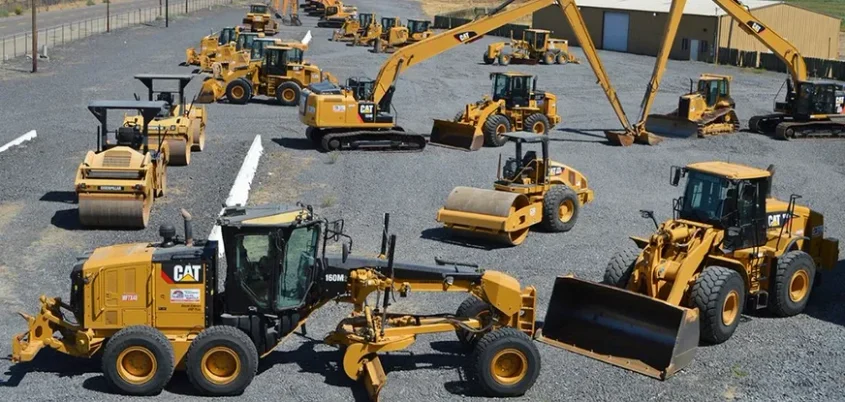
Heavy equipment can injure both the operator and workers on foot. In California construction, industrial, warehouse, agricultural, and similar settings, recurring hazards include backing and blind spots, rollovers, struck-by and caught-between events, unstable loads, unexpected movement during service, defective or poorly maintained equipment, inadequate traffic control, and communication failures between operators and ground workers.
California safety rules address many of these risks. Title 8 section 3664 contains operating rules for industrial trucks, tractors, haulage vehicles, and earthmoving equipment. Construction rule section 1592 addresses warning methods during backing operations. Section 3314 addresses hazardous-energy control during cleaning, repair, servicing, set-up, and adjustment. And section 3203 requires a written Injury and Illness Prevention Program with hazard identification, correction, investigation, and training components for covered employers.
After an equipment accident, the first priorities are medical care and preventing another injury. Then document which machine was involved, what it was doing, who controlled it, the work-zone layout, warnings/spotters, equipment condition, witnesses, and the injury timeline. Those facts can be important to a workers’ compensation claim and, in some cases, to evaluating whether a legally separate third party was involved.
What counts as a heavy-equipment hazard?
There is no single accident pattern. The equipment, worksite, and job assignment matter.
Examples can include:
- excavators and backhoes;
- loaders and skid steers;
- bulldozers;
- tractors;
- forklifts and industrial trucks;
- haul trucks and dump vehicles;
- cranes and lifting equipment;
- compactors and rollers;
- powered carts and tow tractors; and
- other mobile or earthmoving equipment.
The useful question is not simply “was heavy equipment involved?” It is how did the equipment, people, and work zone interact immediately before the injury?
Backing and blind spots: a recurring struck-by hazard
Large vehicles can have significant areas that the operator cannot see directly. Noise and congestion can also make it hard for workers on foot to recognize movement in time.
California construction rule section 1592 addresses warning methods. For certain large haulage vehicles, the rule requires an automatic backing warning device; in congested or high-noise areas where the warning may be obscured, a signaler in clear view of the operator must direct the backing operation. For other vehicles whose backward movement creates a hazard and whose rear vision is obstructed, the rule identifies safeguards such as a backing alarm, automatic braking, a spotter/flagger, procedures requiring the operator to dismount and check, exclusion of foot traffic, or other equivalent means.
After a backing accident, useful questions include:
- Was the machine reversing?
- Could the operator see the injured worker?
- Was a backup alarm operating?
- Was the area too noisy for an alarm to be useful?
- Was a spotter assigned, and where was the spotter positioned?
- Were workers on foot segregated from the equipment route?
- Did site conditions change during the shift?
Do not assume the answer from memory weeks later. Scene photographs, video, witness names, site plans, and equipment identifiers can become important.
Rollovers, edges, slopes, and seat-belt / ROPS issues
Tractors and earthmoving equipment can become unstable around slopes, holes, edges, soft ground, loads, and sudden direction changes.
California Title 8 section 3664 includes operating instructions for agricultural and industrial tractors, including securing the seat belt when the tractor has rollover protection and avoiding operation near ditches, embankments, and holes where possible. Separate California rules address rollover protective structures and seat belts for covered equipment.
A rollover analysis may involve:
- whether the machine had required rollover protection;
- whether a seat belt was available and functional;
- the condition and grade of the surface;
- edge protection and travel route;
- load and attachment configuration;
- machine speed and maneuver;
- maintenance condition; and
- the operator’s training and assignment.
Those facts should be preserved without jumping to conclusions about fault.
Pre-use inspections and unsafe equipment
California’s operating rules require attention to equipment condition. Section 3664 includes pre-use inspection concepts and states that unsafe equipment should be reported and not used until it is made safe.
Potential equipment-condition evidence includes:
- machine number, serial number, or fleet identifier;
- pre-shift or pre-use inspection sheets;
- maintenance requests;
- repair tickets;
- warning lights or fault codes;
- photographs of tires, brakes, forks, attachments, alarms, guards, mirrors, or cameras;
- messages reporting a defect; and
- names of people who knew about the condition.
An injured worker should not remove parts, alter the equipment, or trespass into restricted areas to gather evidence. Preserve what you can lawfully access and tell counsel promptly if the equipment may be repaired, returned to a rental company, sold, or discarded.
Servicing and maintenance: unexpected energy is a different danger
An equipment accident during operation and an injury during repair are not the same type of event.
California Title 8 section 3314 addresses hazardous-energy control for covered cleaning, repair, servicing, set-up, and adjustment operations. It applies where unexpected energization, startup, or release of stored energy could injure workers. The rule addresses de-energizing, locking/tagging, blocking where needed, written procedures, and training.
Heavy equipment can store energy in more than an electrical circuit. Depending on the machine, hazardous energy can involve:
- hydraulic pressure;
- gravity and elevated components;
- pneumatic pressure;
- mechanical springs or rotating parts;
- thermal energy;
- electrical energy; or
- residual pressure after shutdown.
If an injury happened during maintenance, document exactly what task was being performed and what energy source moved or released.
Work-zone organization and California’s Injury and Illness Prevention Program
California Title 8 section 3203 generally requires covered employers to establish, implement, and maintain an effective written Injury and Illness Prevention Program. Among other elements, the rule addresses hazard identification and evaluation, investigation of occupational injury or illness, timely correction, communication, and training.
For heavy-equipment operations, those program-level duties can intersect with everyday issues such as:
- pedestrian/equipment separation;
- traffic routes;
- spotters and communication methods;
- operator training;
- supervisor awareness;
- changing ground conditions;
- new equipment or attachments;
- night work or poor visibility; and
- correcting a reported hazard.
A workers’ compensation claim does not require the injured employee to prove that the employer violated a safety rule. But safety evidence can help explain how the incident happened and can identify records worth preserving.
Common heavy-equipment injury patterns
Heavy equipment can cause severe injuries because of mass, force, height, stored energy, and limited reaction time.
Depending on the event, injuries can include:
- fractures;
- crush injuries;
- amputations;
- traumatic brain injuries;
- spinal injuries;
- internal injuries;
- severe lacerations;
- burns;
- shoulder, knee, and other orthopedic injuries; and
- psychological symptoms following a traumatic event.
The medical record should identify the actual mechanism. “Equipment accident” is too vague if the worker was pinned, struck, fell from the cab, was caught between machines, or was injured when a hydraulic component moved during service.
What to do immediately after a heavy-equipment accident
1. Get emergency medical help when needed
Do not delay urgent treatment to take photos or finish a shift.
2. Make the area safe
Follow emergency procedures. Do not approach unstable equipment, suspended loads, energized systems, or leaking fuel/hydraulic hazards unless your job, training, and emergency procedure require it.
3. Report the injury promptly
Tell the employer that the injury happened at work. California DWC advises injured workers to report job injuries as soon as possible.
4. Start the workers’ compensation claim process
Request and complete the DWC-1 when appropriate. Keep a copy and proof of submission.
5. Identify the equipment precisely
Record, when possible:
- type of machine;
- employer/rental/contractor markings;
- unit number;
- serial/model information if readily available;
- attachment in use;
- operator identity;
- direction of travel or operation; and
- condition immediately after the event.
6. Preserve the work-zone evidence
Useful evidence can include photographs, video, witness information, supervisor messages, incident reports, traffic plans, inspection sheets, and medical documentation.
If a serious accident is likely to trigger an employer investigation, do not assume that the employer’s investigation replaces your own need to keep records you are entitled to possess.
Build a practical equipment-accident evidence file
A useful file may contain:
- DWC-1 and submission proof;
- incident report;
- emergency/clinic records;
- all work-status notes;
- wage-loss dates;
- photos and video;
- equipment identity information;
- names and contact information of witnesses;
- messages about equipment problems;
- inspection/maintenance records you lawfully possess;
- rental-company or contractor information if relevant;
- Cal/OSHA correspondence if any; and
- a written chronology prepared while the facts are fresh.
Keep originals. Do not edit photos to add arrows or text without preserving the unedited originals too.
Workers’ compensation does not require you to prove ordinary negligence
California workers’ compensation is generally a no-fault employment injury system. An employee normally does not have to prove ordinary employer negligence just to establish entitlement to workers’ compensation benefits for an otherwise compensable work injury.
That distinction matters because legacy web content often turns every equipment case into a negligence discussion. For an injured worker, the immediate questions are usually:
- Did the injury arise out of and occur in the course of employment?
- Was it reported?
- Was a DWC-1 filed?
- What does the medical evidence show?
- Is treatment authorized?
- Are work restrictions being followed?
- Is wage loss or permanent impairment involved?
Those are the core workers’ compensation issues.
What workers’ compensation benefits may be involved?
Depending on the facts, benefits can include:
- reasonable medical treatment;
- temporary disability benefits for qualifying wage loss;
- permanent disability benefits for qualifying lasting impairment;
- supplemental job displacement benefits in qualifying cases; and
- death benefits for eligible dependents after a fatal work injury.
The amount and availability of benefits cannot be determined from the equipment type alone.
When might a separate third-party issue exist?
A heavy-equipment accident can sometimes involve a company or person legally separate from the injured worker’s employer.
Examples that may justify investigation include allegations involving:
- a defective product or component;
- an outside maintenance company;
- a rental or leasing entity with a legally relevant role;
- another contractor’s operator; or
- another non-employer entity whose conduct independently contributed to the accident.
That does not mean every construction-site or equipment accident creates a civil lawsuit. Employment relationships, control, product history, contracts, workers’ compensation exclusivity rules, and other facts can change the analysis.
When a potential third party is involved, early evidence preservation can matter because equipment may be repaired, returned, or modified quickly.
Bottom Line
Heavy-equipment accidents are rarely explained by one phrase such as “operator error.” A useful California analysis looks at movement, visibility, work-zone controls, machine condition, training, maintenance, warning systems, stored energy, and what the equipment was doing at the exact moment of injury.
For the injured worker, the practical priority is equally specific: get care, report the injury, start the DWC-1 process, preserve the equipment and scene details you can lawfully document, and maintain a clean medical and work-status record.
If a heavy-equipment injury has resulted in significant treatment, wage loss, permanent restrictions, a denied claim, or questions about a potentially separate third party, Hussain & Gutierrez can review the California workers’ compensation issues and the evidence that should be preserved.
Frequently asked questions
What should I document after a heavy-equipment accident?
Document the machine identity, operator, work assignment, direction/movement, work-zone layout, warnings or spotters, witnesses, equipment condition, incident report, medical care, and DWC-1 filing record.
Does California require backup alarms or spotters?
California construction rule section 1592 contains specific backing-warning requirements. The required method depends on vehicle type, visibility, noise, and whether backward movement creates a hazard to workers on foot.
What if I was injured while repairing or unjamming equipment?
Hazardous-energy rules may become especially important. Title 8 section 3314 addresses covered cleaning, repair, servicing, set-up, adjustment, and unjamming where unexpected startup or stored energy could injure workers.
Do I have to prove my employer was negligent to receive workers’ comp?
Generally, workers’ compensation is a no-fault system. A compensability analysis is different from proving ordinary negligence in a civil lawsuit.
Can an equipment accident involve both workers’ comp and a third-party case?
Potentially, if facts support liability against a legally separate non-employer entity. It is not automatic and should be evaluated from the actual relationships, product history, control, and evidence.
Sources and Legal References
- California Code of Regulations, Title 8, §3664 — Operating Rules
- California Code of Regulations, Title 8, §1592 — Warning Methods
- California Code of Regulations, Title 8, §3314 — Hazardous Energy / Lockout-Tagout
- California Code of Regulations, Title 8, §3203 — Injury and Illness Prevention Program
- California Code of Regulations, Title 8, §3653 — Seat Belts
- California Code of Regulations, Title 8, §1596 — Rollover Protective Structures
- California DWC — Injured Worker
- California DWC — How to File a Claim