
Quick Answer
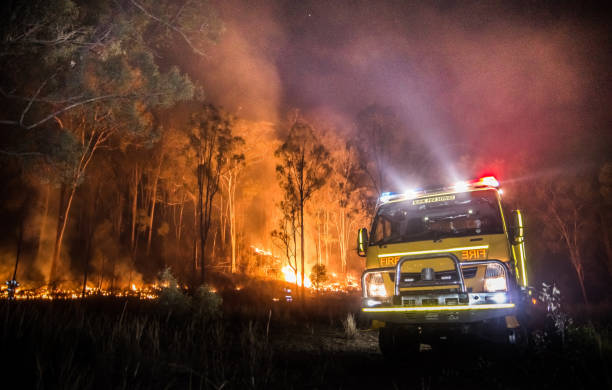
Wildland firefighters can face repeated smoke exposure, heat, fatigue, burns, falling objects, vehicle hazards, and other risks during fire assignments. For smoke, the legal and safety framework is easy to misstate: California's general Title 8 section 5141.1 wildfire-smoke standard currently exempts firefighters engaged in wildland firefighting. Separate wildland-firefighter protective-equipment rules apply, and the medical effects of repeated smoke exposure should be described with care because long-term risk remains an active area of research.
What Wildland Fire Smoke Can Contain
NIOSH describes wildland fire smoke as a complex mixture that changes with weather, fire behavior, vegetation, and whether structures or other man-made materials are burning. Depending on the fire, workers may encounter particulate matter and gases such as carbon monoxide as well as volatile or irritating compounds.
That variability is one reason a generic list of toxins should not be treated as proof that a particular firefighter received a particular dose or developed a particular condition. Useful evidence connects the worker to specific assignments, conditions, duration, symptoms, and medical findings.
The General Wildfire-Smoke Rule Has a Firefighter Exemption
California employers in many outdoor workplaces use Title 8 section 5141.1 when PM2.5 from wildfire smoke reaches the rule's threshold and exposure is reasonably anticipated. But the regulation expressly lists firefighters engaged in wildland firefighting as an exempt operation.
That exemption matters. A page for wildland firefighters should not simply copy the AQI-triggered N95 language written for other outdoor workers and present it as the governing frontline-firefighting rule. It also does not mean firefighters have no safety protections. California maintains a separate firefighter PPE framework.
California Wildland Firefighter PPE Rules
Title 8 section 3401 states that sections 3410 and 3410.1 apply to wildland firefighting. Section 3410 requires a written risk assessment for wildland-firefighting PPE selection and addresses inspection, cleaning, training, retirement, and records. Section 3410.1 sets requirements for head and eye protection, thermal protection, protective garments, chainsaw protectors where applicable, gloves, footwear, fire shelters, and load-carrying equipment.
These rules are safety context, not a shortcut to workers' compensation liability. A PPE problem can be important evidence, but a violation does not automatically establish medical causation, benefit entitlement, or a separate civil claim.
Medical Symptoms and Long-Term Risk
Smoke can cause acute eye and respiratory irritation, coughing, breathing difficulty, headache, or other symptoms, and urgent symptoms such as severe breathing problems or chest pain require prompt medical attention. Long-term disease questions are more complicated. NIOSH's 2026 wildland-smoke guidance says researchers still do not fully understand how repeated high-concentration exposure affects workers over time.
For a claim, avoid self-diagnosing cancer, COPD, neurologic injury, or cardiovascular disease from a fire assignment. Tell the clinician what work was performed, where, for how long, what smoke or products were present if known, what PPE was used, when symptoms began, and whether similar exposures occurred on earlier assignments.
Evidence to Preserve After Heavy Smoke Exposure
- incident and resource-order numbers, crew assignment, division or branch, and fire location;
- shift dates, hours, spike-camp or base-camp conditions, and time spent in heavy smoke;
- available air-monitoring or incident air-quality records without assuming they equal personal dose;
- PPE issue, inspection, replacement, cleaning, and training records;
- reports of equipment failure or unusual wildland-urban-interface exposures;
- contemporaneous symptom notes and supervisor reports;
- medical records that identify the work exposure and symptom timeline; and
- prior wildfire assignments if the concern is cumulative exposure rather than one event.
Workers Comp and Firefighter Presumptions
A smoke-related injury or illness can involve ordinary workers' compensation causation rules, and some qualifying firefighters may also fall within statutory presumption provisions. Labor Code section 3212.1, for example, covers specified categories of active firefighters and a cancer presumption under defined conditions. Coverage is not determined by the word firefighter alone.
Bottom Line
For wildland firefighters, the useful record is exposure-specific. Document the assignment, conditions, PPE, symptoms, and medical evaluation, and distinguish a one-time incident from cumulative exposure. Do not apply the general section 5141.1 wildfire-smoke program to wildland firefighting as though the exemption did not exist.
Sources and Legal References
- NIOSH – Wildland Fire Smoke, July 16, 2026
- California Title 8 section 5141.1 – Protection from Wildfire Smoke
- California Title 8 section 3401 – Firefighter PPE application
- California Title 8 section 3410 – Wildland firefighter protective ensembles
- California Title 8 section 3410.1 – Wildland firefighter PPE
- California Labor Code section 3212.1 – qualifying firefighter cancer presumption
- Cal/OSHA – AB 2243 Wildfire Smoke advisory rulemaking
Related Legal Resources
- Van Nuys Occupational Illness Exposure Lawyer
- California Firefighter Workers' Comp: Injury Risks, Presumptions, Evidence, and Benefits
- Toxic Exposure at Work in California: Symptoms, Evidence, and Workers’ Compensation
- Medical Treatment Attorney Van Nuys
- Dangerous Occupations Lawyer Van Nuys
- Workers Compensation Attorney In Van Nuys
- Contact Hussain & Gutierrez
This content is general legal information and is not individualized legal advice.