
Quick Answer
Solar installers and maintenance workers can face electric shock, arc-related hazards, falls, heat, and material-handling risks. Photovoltaic systems deserve their own safety discussion because PV source circuits can produce direct-current electricity when exposed to light, while the work may also involve inverters, disconnects, building wiring, and rooftop access.
For a California workers’ compensation case, the useful questions are what task was underway, what parts of the system were energized or capable of producing current, what controls and training were in place, what incident records exist, and what medical findings and work restrictions were documented. A safety issue can help explain the event but does not automatically decide compensability.
Why Photovoltaic Work Has a Distinct Electrical Risk
A photovoltaic array converts light into electricity. California section 2588.1 describes Article 88 as applying to covered solar photovoltaic systems that may be interactive with other electric power sources or stand alone, with or without storage, and may have AC or DC output. That means a worker may encounter multiple parts of an electrical system rather than one simple switch.
PV Circuits and Disconnecting Means Matter
California section 2588.2 addresses separation of photovoltaic source and output circuits from conductors of other systems unless the specified conditions are met. Section 2588.3 requires a means to disconnect current-carrying conductors of a photovoltaic power source from other conductors in a building or structure. These rules are technical installation requirements, not a substitute for job-specific hazard assessment.
After an incident, useful evidence can include the system design, circuit identification, equipment labeling, disconnect location and condition, inverter and battery information where relevant, commissioning or maintenance records, and photographs of the work area. Preserve the state of the equipment when it can be done safely; do not advise an injured worker to re-enter an energized area to obtain evidence.
Working on Energized Equipment Requires Specific Safeguards
Title 8 section 2320.2 states that work on exposed energized parts is not to be performed until specified conditions are met, including a responsible-supervision determination, instruction on the work techniques and hazards, and suitable protective equipment and safeguards. The section contains details and exceptions that should be applied by qualified electrical-safety personnel, not simplified into an internet checklist for live work.
For claim evidence, document who assigned the task, the worker’s training and qualifications, whether the equipment was intended to be energized, what PPE or insulated tools were provided, whether a lockout/tagout or other hazardous-energy procedure applied, and what witnesses observed.
Solar Work Also Creates Fall and Access Hazards
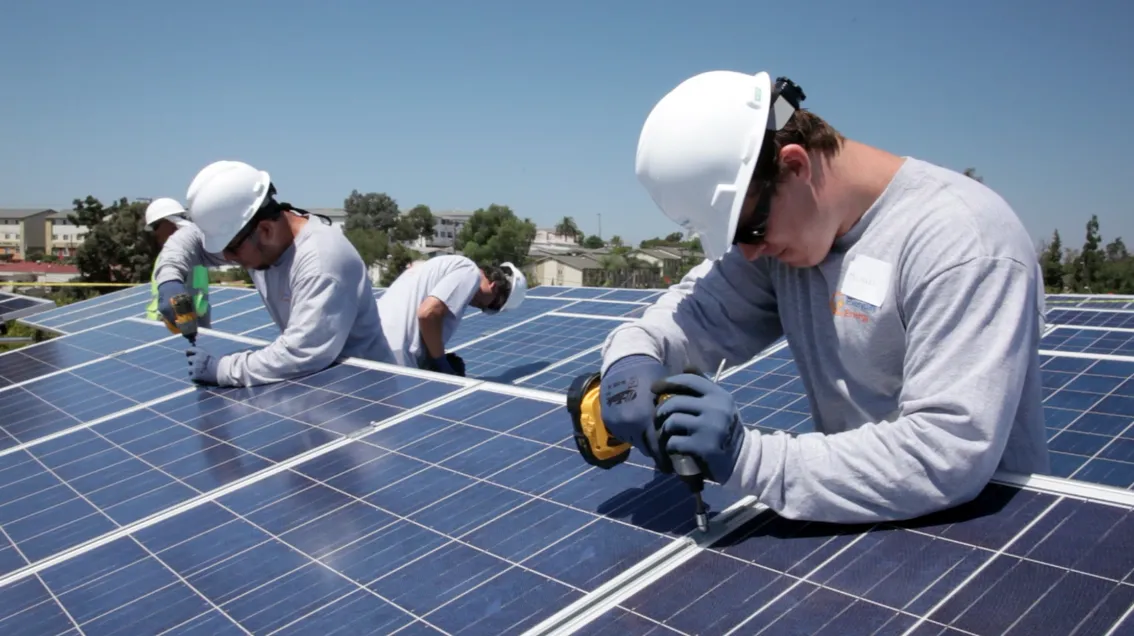
OSHA’s solar safety materials note that installation and maintenance can expose workers to falls as well as electrical hazards. Rooftop work can involve ladders, roof edges, skylights, restricted walking areas, and handling large panels.
Medical Attention After an Electrical Incident
Electric shock and arc events can produce burns, falls, trauma, and other health effects. Emergency symptoms and treatment decisions belong to qualified clinicians. The content should focus on obtaining appropriate medical care, accurately reporting the mechanism, and preserving medical and work-status documentation.
Workers’ Comp and Evidence After a Solar-Work Incident
- Report the incident and identify the specific solar/PV task being performed.
- Preserve the job address, employer or contractor assignment, system or project identifiers, and witness names.
- Keep safety records that lawfully come into the worker’s possession, including training, incident reports, photos, and written instructions.
- Preserve medical records and work restrictions; do not self-diagnose electrical injury severity from online guidance.
- If defective equipment or a non-employer third party may be involved, flag that issue for separate legal review rather than promising an additional lawsuit.
Bottom Line
After an incident, useful evidence can include the system design, circuit identification, equipment labeling, disconnect location and condition, inverter and battery information where relevant, commissioning or maintenance records, and photographs of the work area. Preserve the state of the equipment when it can be done safely; do not advise an injured worker to re-enter an energized area to obtain evidence.
Sources and Legal References
- California Title 8 §2588.1
- California Title 8 §2588.2
- California Title 8 §2588.3
- California Title 8 §2320.2
- OSHA – Solar Energy Electrical Hazards
Related Legal Resources
- Construction Injuries Lawyer Van Nuys
- Electrical Injuries and Electrocution on California Construction Sites: Workers’ Comp, Safety, and Evidence
- Burn Injuries Lawyer Van Nuys
- How To Report An Unsafe Working Environment
- Medical Treatment Attorney Van Nuys
- Contact Hussain & Gutierrez
This content is general California legal information and is not individualized legal advice.